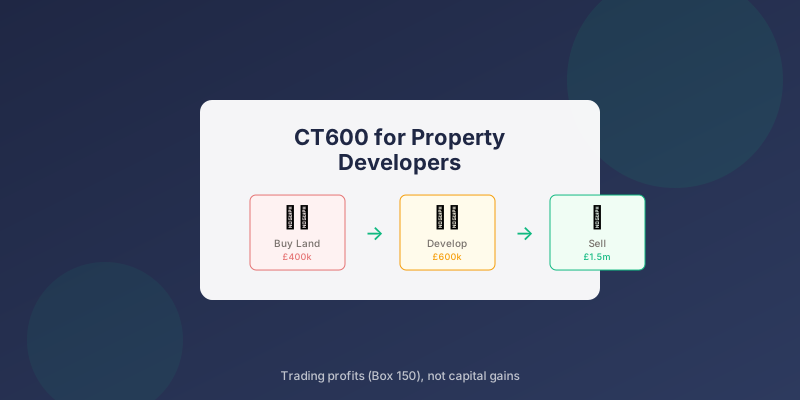
CT600 for Property Developers: Complete Guide
Property development companies have unique CT600 considerations. Unlike property investment (rental income), development is a trade - which affects how profits are taxed and reported.
Property Developer vs Property Investor
Key Distinction
| Aspect | Developer (Trading) | Investor (Rental) |
|---|---|---|
| Activity | Buy, develop, sell | Buy, hold, rent |
| Income type | Trading income | Property income |
| CT600 box | Box 150 | Box 190 |
| Stock treatment | Trading stock | Capital asset |
| Gain on sale | Trading profit | Capital gain |
Why It Matters
Property developers have:
- All profits taxed as trading income
- No capital gains treatment
- Different loss relief options
- Stock valuation requirements
Trading Income for Developers
Box 150: Gross Trading Income
Development profits go in Box 150:
- Sales proceeds from completed developments
- Profit recognised on long contracts
- Any related trading income
Calculating Development Profits
``` Sale proceeds
- Land cost
- Construction costs
- Professional fees
- Finance costs (development period)
- Sales costs
Development Costs
Allowable Expenses
| Cost | Treatment |
|---|---|
| Land purchase | Part of stock cost |
| Construction | Part of stock cost |
| Architect fees | Part of stock cost |
| Planning fees | Part of stock cost |
| Building regulations | Part of stock cost |
| Interest (during development) | Often capitalisable |
| Legal fees (purchase/sale) | Deductible |
| Marketing/sales costs | Deductible |
Stock Valuation
Unsold developments are trading stock:
- Valued at lower of cost or net realisable value
- Cost includes land + construction + fees
- Affects profit calculation
Work in Progress
Development WIP
Long-term developments create WIP:
- Multi-year projects
- Costs incurred before sale
- May need partial profit recognition
CT600 Treatment
| Stage | Treatment |
|---|---|
| Land held for development | Stock at cost |
| Development in progress | WIP at cost |
| Completed, unsold | Stock at lower of cost/NRV |
| Sold | Profit recognised |
Finance Costs
Interest Deductibility
Development interest may be:
- Capitalised (added to development cost)
- Expensed (deducted when incurred)
Capitalisation Rules
Interest can typically be capitalised if:
- Directly attributable to development
- During the development period
- Before units are ready for sale
Example
| Period | Interest | Treatment |
|---|---|---|
| During construction | £50,000 | Capitalise (add to cost) |
| After completion | £10,000 | Expense (deduct) |
Multi-Unit Developments
Recognising Profit
For developments with multiple units:
- Can recognise profit as units sell
- Or wait until project complete
- Must be consistent
Example: 10 Unit Development
| Item | Amount |
|---|---|
| Total costs | £2,000,000 |
| Cost per unit | £200,000 |
| Sale price per unit | £300,000 |
| Profit per unit | £100,000 |
Common Developer Scenarios
Buy, Renovate, Sell
| Phase | CT600 Impact |
|---|---|
| Purchase | Stock at cost |
| Renovation | Add to stock cost |
| Sale | Box 150 profit |
Ground-Up Development
| Phase | CT600 Impact |
|---|---|
| Land purchase | Stock at cost |
| Planning | Add to stock cost |
| Construction | Add to stock cost |
| Sale | Box 150 profit |
Mixed Development (Some Retained)
If you develop units and keep some for rental:
- Sold units: Trading profit (Box 150)
- Retained units: Transfer to investment (Box 190 income)
- Transfer value: Market value at transfer
Tax Planning for Developers
Timing of Profit Recognition
Developers can sometimes influence when profit is recognised:
- Complete sale before year end = this year's profit
- Complete after year end = next year's profit
- Must not be artificial
Loss Years
If a development makes a loss:
- Trading loss relief available
- Can offset against other profits
- Can carry back or forward
Associated Companies
Multiple development companies?
- Associated company rules apply
- Affects Corporation Tax rate thresholds
- Consider group structure
CT600 Filing Example
Development Company Scenario
Project Summary:
- 5 houses developed and sold
- Total sales: £1,500,000
- Land cost: £400,000
- Construction: £650,000
- Other costs: £150,000
- Capitalised interest: £50,000
| Item | Amount |
|---|---|
| Sales | £1,500,000 |
| Less: Land | (£400,000) |
| Less: Construction | (£650,000) |
| Less: Other costs | (£150,000) |
| Less: Capitalised interest | (£50,000) |
| Trading profit | £250,000 |
| Box | Amount |
|---|---|
| 150 | £1,500,000 |
| 155 | £250,000 |
| 165 | £250,000 |
| 300 | £250,000 |
| 315 | £62,500 (at 25%) |
When Using TinyTax
TinyTax handles property developer CT600s:
- Trading income goes in the normal income section
- Development costs are deducted as expenses
- Profit flows to correct CT600 boxes
- Tax calculated automatically
Related Articles
- CT600 for Property Companies
- CT600 Box 150: Trading Income
- Capital Allowances on CT600
- CT600 Boxes Explained
Need Help?
TinyTax makes CT600 filing straightforward for property developers. Enter your income and costs, and the software handles the rest.
Start Your CT600 Filing →