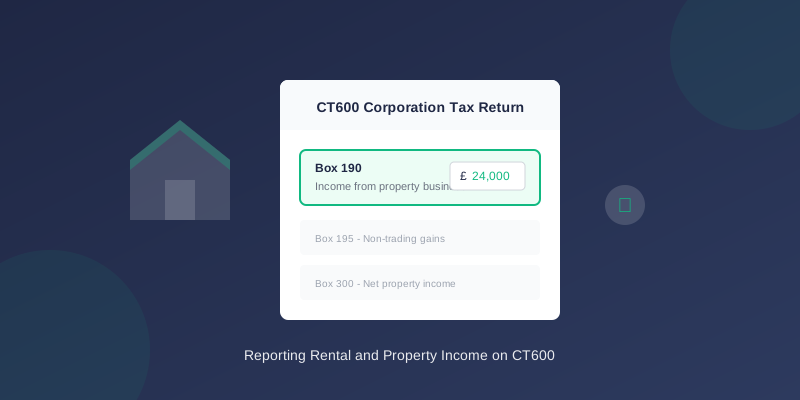
CT600 Box 190: Property Income Explained
If your company receives rental income or has a property business, you need to report this in Box 190. This guide explains what goes in this box and how property income is taxed.
What is Box 190?
Box 190 on the CT600 is labelled "Income from a property business" (or "Property income").
This box reports income from:
- Letting residential property
- Letting commercial property
- Other property-related income
What Goes in Box 190?
Include:
- Rental income from UK property
- Rental income from overseas property
- Lease premiums received
- Other property business income
- Trading profits (even if your trade involves property)
- Property development profits (usually trading)
- One-off property sales (capital gains)
- Property held as stock (trading income)
Property Business vs Property Trading
This distinction is crucial:
| Property Business (Box 190) | Property Trading (Box 165) |
|---|---|
| Letting properties | Building and selling properties |
| Passive rental income | Active development for profit |
| Investment holding | Stock-in-trade |
| Taxed as property income | Taxed as trading income |
How to Calculate Box 190
Step 1: Calculate Gross Rental Income
Add up all rental income received:
``` Property 1 rent £12,000 Property 2 rent £15,000 Property 3 rent £10,800 Total gross rent £37,800 ```
Step 2: Deduct Allowable Expenses
Subtract allowable property expenses:
``` Gross rental income £37,800 Less: Mortgage interest (£8,000) Less: Repairs (£2,500) Less: Insurance (£1,200) Less: Agent fees (£3,780) Less: Other expenses (£1,500) Net property income £20,820 ```
Step 3: Enter in Box 190
Enter the net property income in Box 190:
Box 190: £20,820
Allowable Property Expenses
You can deduct these expenses from rental income:
Fully Deductible:
- Letting agent fees and management costs
- Buildings insurance
- Ground rent and service charges
- Council tax (if landlord pays)
- Utility bills (if landlord pays)
- Professional fees (accountancy, legal)
- Advertising for tenants
Finance Costs:
- Mortgage interest (fully deductible for companies)
- Loan interest on property purchases
- Arrangement fees (may need spreading)
Repairs vs Improvements:
- Repairs - Fully deductible (like-for-like replacement)
- Improvements - Not deductible (capital expenditure)
Capital Allowances:
- Plant and machinery in furnished lettings
- Equipment for commercial properties
- Not available for residential fixtures
Property Losses
If your property expenses exceed income:
``` Gross rental income £20,000 Less: Expenses (£25,000) Property loss (£5,000) ```
Property losses:
- Cannot offset against trading profits
- Can carry forward against future property income
- Can offset against total profits if you make a claim
Multiple Properties
If you have multiple properties, they form a single "property business":
``` Property 1: £12,000 profit Property 2: £8,000 profit Property 3: £3,000 loss Net property income: £17,000 ← Box 190 ```
Profits and losses from different properties are pooled.
Box 190 vs Box 300
Two boxes relate to property income:
| Box 190 | Box 300 |
|---|---|
| Income from property business | Net property income |
| Before some adjustments | After adjustments |
| Gross property profit | Final property income |
Example: Simple Buy-to-Let
Company owns one property:
- Annual rent: £18,000
- Mortgage interest: £6,000
- Repairs: £1,500
- Insurance: £500
- Agent fees: £1,800
Box 190: £8,200
Example: Property Company with Trading
Company has:
- Trading profit: £50,000
- Rental income (net): £15,000
- Box 165: £50,000 (trading)
- Box 190: £15,000 (property)
- Box 410: £65,000 (total profits)
Corporation Tax on Property Income
Property income is taxed at the same Corporation Tax rates as trading income:
| Profit Level | Tax Rate |
|---|---|
| Up to £50,000 | 19% |
| £50,001 - £250,000 | 25% with marginal relief |
| Over £250,000 | 25% |
Common Mistakes
1. Treating All Property as Trading
Wrong: Putting rental income in Box 165 Right: Rental income goes in Box 190
2. Including Capital Costs
Wrong: Deducting the cost of a new bathroom Right: Improvements are capital, only repairs are deductible
3. Missing Finance Costs
Wrong: Forgetting to claim mortgage interest Right: Mortgage interest is fully deductible for companies
4. Wrong Year for Rent
Wrong: Using cash received instead of rent due Right: Use accruals basis (rent due, not received)
Furnished Holiday Lettings
Furnished holiday lettings (FHL) have special rules:
- Treated as a trade (not property business)
- Goes in trading profit boxes
- Capital allowances available
- But: Special FHL rules are being phased out
When Using TinyTax
TinyTax handles property companies by:
- Separating property income from trading
- Calculating allowable expenses
- Populating Box 190 correctly
- Handling multiple properties
Related Articles
- CT600 for Property Companies: Complete Guide
- CT600 for Buy-to-Let Companies
- CT600 Boxes Explained: Understanding Every Field
Need Help?
Property companies have specific tax rules. TinyTax guides you through reporting property income correctly on your CT600.
Start Your CT600 Filing →