When Are Company Accounts Due?
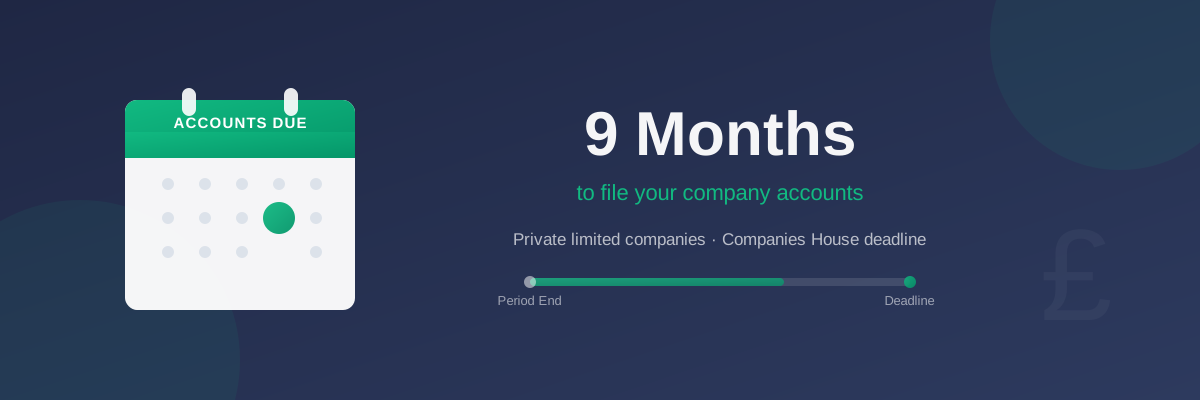
For most private limited companies, accounts must be filed with Companies House 9 months after the end of your accounting period. If you are filing your first accounts as a newly incorporated company, a longer deadline applies. Your HMRC company tax return also has a separate deadline.
This guide explains the key dates, how to calculate your deadline, and what happens if you miss it.
The Standard Deadline: 9 Months After Period End
Private limited companies must file annual accounts with Companies House within 9 months of their accounting reference date — the last day of their accounting period.
| Company Type | Filing Deadline |
|---|---|
| Private limited company | 9 months after accounting period end |
| Public limited company (PLC) | 6 months after accounting period end |
Your accounting period is usually your company's financial year — typically a 12-month period ending on the date you chose when you incorporated or last changed your accounting reference date. If you are unsure of your accounting reference date, you can find it on your company's record at Companies House.
First Accounts: You Have Longer
If you are filing your first set of accounts as a newly incorporated company, different rules apply. The deadline is 21 months from the date of incorporation — not from the accounting period end.
This accounts for the fact that your first accounting period often runs longer than 12 months, from your incorporation date to your first accounting reference date.
Example: If your company was incorporated on 1 February 2025, your first accounts must be filed by 1 November 2026 (21 months from incorporation).
After the first accounts, you revert to the standard 9-month deadline calculated from your accounting reference date. It is worth noting that first accounts can cover a period of up to 18 months, so your initial filing may encompass a longer-than-usual trading period.
How to Find Your Exact Deadline
The simplest way to check your current accounts deadline is through the Companies House register:
- Go to Find and update company information
- Search by your company name or number
- View the "Accounts" section — your next due date is shown there
Companies House vs HMRC: Different Deadlines
Many directors assume one filing covers both obligations. It does not. Companies House and HMRC have separate filings with different deadlines.
| Obligation | Authority | Deadline |
|---|---|---|
| Annual accounts | Companies House | 9 months after period end |
| Company tax return (CT600) | HMRC | 12 months after period end |
| Corporation tax payment | HMRC | 9 months and 1 day after period end |
This means the practical order of obligations for most companies is: pay corporation tax by month 9, file Companies House accounts by month 9, file the CT600 return by month 12. Planning around all three deadlines from the moment your accounting period ends will prevent missed obligations.
For full details on CT600 timing and penalties, see our guide to company tax return deadlines.
What Counts as Filed?
Your accounts are only treated as received when Companies House accepts them. This matters because:
- Electronic submissions are timestamped immediately on acceptance — filing by midnight on the deadline date counts
- Rejected accounts are not treated as filed — you must correct and resubmit before the deadline
- Paper filings are counted from the date Companies House receives them, not the postmark date
Late Filing Penalties
Companies House applies automatic civil penalties when accounts arrive late. There is no warning — the penalty applies as soon as you miss the deadline.
| How Late | Penalty (Private Limited Company) |
|---|---|
| Up to 1 month | £150 |
| 1 to 3 months | £375 |
| 3 to 6 months | £750 |
| More than 6 months | £1,500 |
Companies House penalties are entirely separate from HMRC penalties for a late CT600 or late corporation tax payment. You can face penalties from both authorities independently.
For a breakdown of how penalties escalate and when appeals are possible, see our guide to late accounts penalties.
Extending Your Deadline
You can apply to Companies House to change your accounting reference date, which may extend your accounts deadline. However, restrictions apply:
- You cannot extend an accounting period to more than 18 months in total
- Extensions are generally limited to once every 5 years
- An extension granted after the deadline has passed does not avoid a penalty already incurred
Dormant Companies
Dormant companies must still file accounts with Companies House, even if no transactions occurred during the year. The same deadlines apply. Dormant accounts are simpler in format — typically just a balance sheet with minimal notes — but the filing obligation is identical to that of an active company.
A common misconception is that if a company has no income or activity, there is nothing to report and no filing required. This is not the case. Companies House requires accounts from every company on the register, dormant or not, and will apply penalties for late dormant accounts just as it would for trading company accounts.
If you have a dormant company and assumed no filing was needed, check your filing history on Companies House as soon as possible. See our guide to dormant company accounts for what is required and how to bring filings up to date.
Summary
Company accounts are due 9 months after the end of your accounting period for most private limited companies. New companies have 21 months from the date of incorporation for their first set of accounts. These deadlines are separate from — and usually earlier than — the 12-month deadline for filing your company tax return with HMRC.
For a comprehensive guide to what your accounts must contain and how to file them, see our guide to filing company accounts.