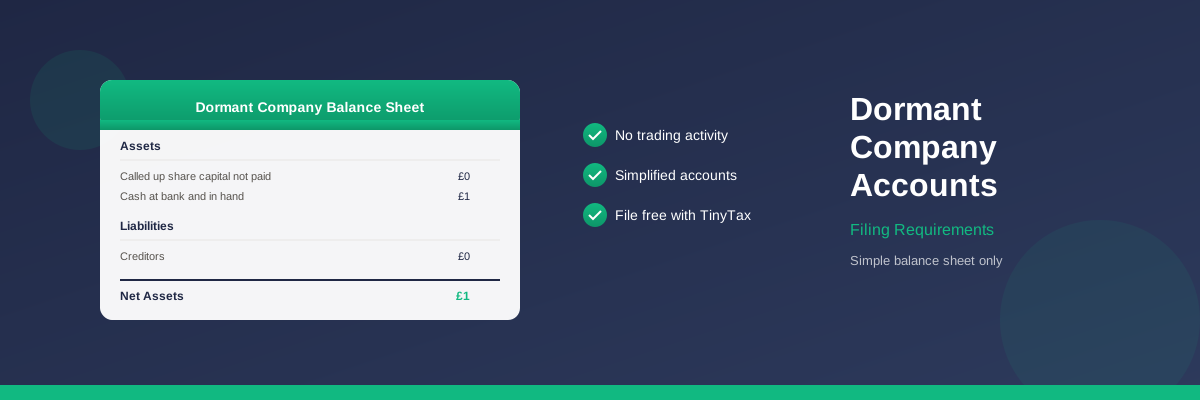
Dormant Company Accounts: Filing Requirements
Even if your company has not traded, you must still file annual accounts with Companies House. The good news is that dormant company accounts are simplified, and Companies House charges no fee to file them.
Here is everything you need to know about dormant company filing requirements.
Yes — even a dormant company must file annual accounts with Companies House every year. Dormant accounts are simplified: a balance sheet only, with no profit and loss account and no audit required. Most dormant companies qualify as small or micro, and Companies House charges no fee to file these accounts.
What Is a Dormant Company?
A company is dormant for Companies House purposes if it has had no significant accounting transactions during the financial year.
Significant transactions include:
- Sales or income of any kind
- Purchases or expenses
- Paying salaries
- Bank interest received
- Any trading activity
- Shares issued on incorporation
- Filing fees paid to Companies House
- Penalties paid to Companies House
- Payment for shares by subscribers
Do Dormant Companies Need to File Accounts?
Yes. All limited companies registered at Companies House must file annual accounts, including dormant ones.
However, dormant companies can claim exemption from audit and file simplified accounts.
What Dormant Accounts Look Like
Dormant company accounts are minimal, typically containing only:
Balance Sheet
- Assets: Usually just cash (often £1 or the initial share capital)
- Liabilities: Usually zero
- Capital and reserves: Share capital only
Notes
- Statement that the company was dormant throughout the period
- Confirmation that directors have taken advantage of exemptions
No Profit and Loss
Dormant companies do not need to file a profit and loss account because there is no trading activity to report.
Example Dormant Balance Sheet
| £ | |
|---|---|
| Current Assets | |
| Cash at bank | 1 |
| Total Assets | 1 |
| Capital and Reserves | |
| Called up share capital | 1 |
| Total Equity | 1 |
Dormant Company Exemptions
Dormant companies can claim exemption from:
Audit Exemption
Dormant companies do not need their accounts audited, regardless of size. This saves significant accounting costs.
Filing Exemption (Small/Micro)
If your dormant company qualifies as small or micro (which most do, having no turnover), you can file abbreviated accounts.
Dormant Subsidiary Exemption
Dormant subsidiaries of larger groups may have additional exemptions available.
Filing Deadline
Dormant companies have the same filing deadline as trading companies:
- 9 months after your accounting reference date
How to File Dormant Accounts
Option 1: TinyTax (Free)
TinyTax files dormant company accounts from £20 a year:
- Sign up and add your company
- Select dormant company option
- Enter your share capital amount
- Submit directly to Companies House
Option 2: Companies House WebFiling
Companies House provides free dormant accounts filing through their website:
- Log in to WebFiling
- Select file dormant accounts
- Complete the simple form
- Submit
Option 3: Accountant
You can use an accountant, but for truly dormant companies, this is usually unnecessary expense.
Common Mistakes
1. Thinking Dormant Means No Filing
The most common mistake is assuming dormant companies do not need to file. They do, every year.
2. Missing the Deadline
Because there is no trading activity, directors sometimes forget about filing deadlines. Set reminders.
3. Filing Wrong Accounts Type
If your company has had any transactions (even bank interest), it may not qualify as dormant and needs different accounts.
4. Not Filing CT600
Dormant companies usually need to file a CT600 with HMRC as well as Companies House accounts. These are separate filings.
When Does Dormancy End?
Your company stops being dormant when it has a significant accounting transaction. From that point:
- Normal accounts filing requirements apply
- You may need to register for Corporation Tax
- CT600 returns become mandatory
Dormant vs Non-Trading
These terms are sometimes confused:
- Dormant - No significant accounting transactions (Companies House term)
- Non-trading - Not actively selling goods/services but may have other transactions
HMRC Dormancy
HMRC has a different definition of dormancy. A company can be:
- Dormant for Companies House but not HMRC
- Required to file CT600 even if dormant for Companies House
Frequently Asked Questions
Do dormant companies have to file accounts?
Yes. Every limited company registered at Companies House must file annual accounts each year, including dormant ones. Dormant accounts are simplified — typically just a balance sheet showing share capital — and need no audit. Failing to file on time triggers the same late filing penalties that apply to trading companies.
What is the deadline for dormant company accounts?
Dormant companies have the same deadline as trading companies: nine months after the accounting reference date. Because there's no trading activity, directors often forget — but late filing penalties apply equally, so it's worth setting a reminder.
Do dormant companies need to file a CT600?
Often yes. HMRC uses a different dormancy definition from Companies House, so a company can be dormant for Companies House but still required to file a Company Tax Return (CT600) with HMRC. These are two separate filings to two different bodies.
What transactions break dormant status?
Any significant accounting transaction — sales, expenses, salaries, or even bank interest received — ends dormancy. Allowed transactions that don't break it include shares issued on incorporation and filing fees or penalties paid to Companies House. A company receiving bank interest is non-trading but not dormant.
Summary
Dormant companies must file annual accounts with Companies House, but these are simplified:
- Balance sheet only
- No profit and loss required
- No audit needed
- No Companies House filing fee