Late Filing Penalties for Company Accounts
Companies House charges automatic penalties if you file your annual accounts late. These penalties are fixed amounts that increase the longer you delay, and they double for repeat offenders.
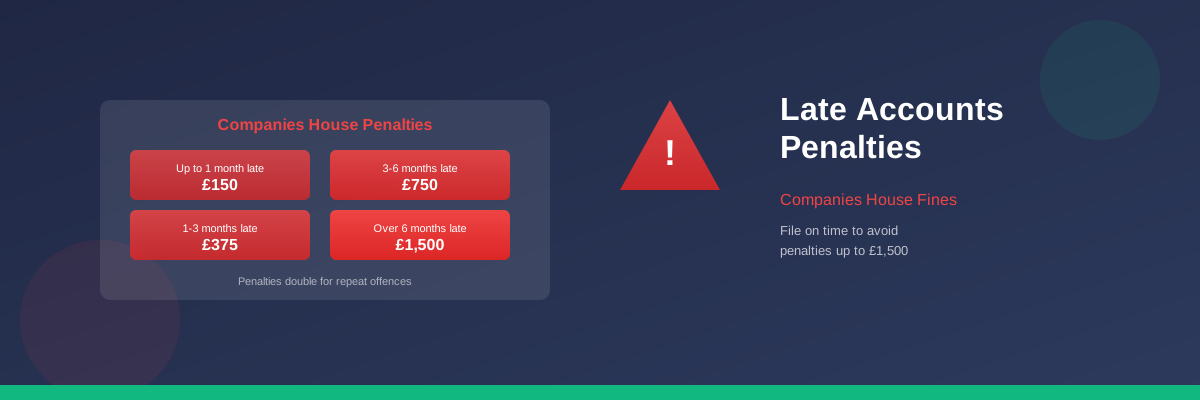
Companies House charges automatic penalties for filing your annual accounts late. For a private company the penalty is £150 if up to one month late, £375 for one to three months, £750 for three to six months, and £1,500 for more than six months. Penalties double if you file late two years running.
Here is everything you need to know about late filing penalties and how to avoid them.
The Filing Deadline
Private limited companies must file accounts within 9 months of their accounting reference date (year end).
For example:
- Year end: 31 March 2025
- Filing deadline: 31 December 2025
Penalty Structure
Private Limited Companies
| How Late | Penalty |
|---|---|
| Up to 1 month | £150 |
| 1 to 3 months | £375 |
| 3 to 6 months | £750 |
| Over 6 months | £1,500 |
Public Limited Companies
| How Late | Penalty |
|---|---|
| Up to 1 month | £750 |
| 1 to 3 months | £1,500 |
| 3 to 6 months | £3,000 |
| Over 6 months | £7,500 |
Repeat Offenders
If you filed accounts late in the previous year, penalties double for the current year:
| How Late | First Offence | Repeat Offence |
|---|---|---|
| Up to 1 month | £150 | £300 |
| 1 to 3 months | £375 | £750 |
| 3 to 6 months | £750 | £1,500 |
| Over 6 months | £1,500 | £3,000 |
Who Pays the Penalty?
The penalty is charged to the company, not the directors personally. However:
- Directors are responsible for ensuring accounts are filed on time
- Persistent late filing can lead to director disqualification
- The penalty reduces company funds
Are Penalties Tax Deductible?
No. Companies House penalties are not an allowable expense for corporation tax.
You must still record them in your accounts, but they are added back when calculating taxable profit. This means the penalty costs your company the full amount.
How to Appeal a Penalty
You can appeal if you have a reasonable excuse. Companies House accepts:
- Serious illness of director or key person
- Death of director or close family member
- Fire, flood, or theft affecting records
- Postal delays (if sent in good time)
- Companies House system issues
- Relying on accountant or company secretary
- Forgetting the deadline
- Being too busy
- Not knowing the deadline
- Company not trading
First Accounts Are Different
Newly incorporated companies have longer for their first accounts:
- 21 months from incorporation date, OR
- 3 months from the accounting reference date
Dormant Companies Still Must File
Even if your company is dormant with no trading activity, you must still file accounts. The same penalties apply.
Dormant company accounts are simple (just a balance sheet), but they must be filed on time.
How to Avoid Late Filing Penalties
1. Know Your Deadline
Check your accounting reference date on the Companies House register. Your deadline is 9 months after this date.
2. Set Reminders
Create calendar reminders:
- 3 months before deadline
- 1 month before deadline
- 1 week before deadline
3. File Early
There is no benefit to waiting. Filing early means:
- No risk of missing the deadline
- Time to correct any issues
- Peace of mind
4. Use Reliable Software
Filing software like TinyTax submits directly to Companies House and provides confirmation of receipt.
5. Do Not Rely on Third Parties
Even if you use an accountant, ultimate responsibility lies with the directors. Chase your accountant well before the deadline.
What If You Cannot Prepare Accounts?
If you genuinely cannot prepare accounts in time:
- File what you can - Even estimated accounts are better than nothing
- Change your accounting reference date - You can shorten your period to buy time (limited to once every 5 years for lengthening)
- Communicate with Companies House - They may grant extensions in exceptional circumstances
Consequences Beyond Penalties
Late filing has other consequences:
- Credit rating impact - Credit agencies note late filings
- Supplier concerns - Partners may view late filing negatively
- Strike off risk - Persistent non-filing can lead to company dissolution
- Director disqualification - Repeated failures can result in ban from being a director
Frequently Asked Questions
How much is the penalty for filing company accounts late?
For a private limited company, Companies House charges £150 if you're up to one month late, £375 for one to three months, £750 for three to six months, and £1,500 for over six months. Public company penalties are higher. The charge is automatic and applies even to dormant companies.
Do late filing penalties double?
Yes. If you file your accounts late in two consecutive financial years, the penalty for the second year is doubled. For a private company more than six months late two years running, that means a £3,000 penalty — so persistent lateness gets expensive quickly.
Can I appeal a late filing penalty?
You can appeal, but Companies House only accepts appeals in exceptional circumstances genuinely beyond your control — a serious illness or an unexpected event, for example. Not knowing the deadline, or relying on someone else who failed to file, is not usually accepted, and the accounts must still be filed.
Summary
Companies House penalties for late accounts range from £150 to £1,500 (double for repeat offenders). These are automatic, non-tax-deductible charges.
The solution is simple: file on time. Use TinyTax to prepare and submit your accounts well before your deadline, and avoid these unnecessary costs.