CT600 Box 175: Annual Payments Explained
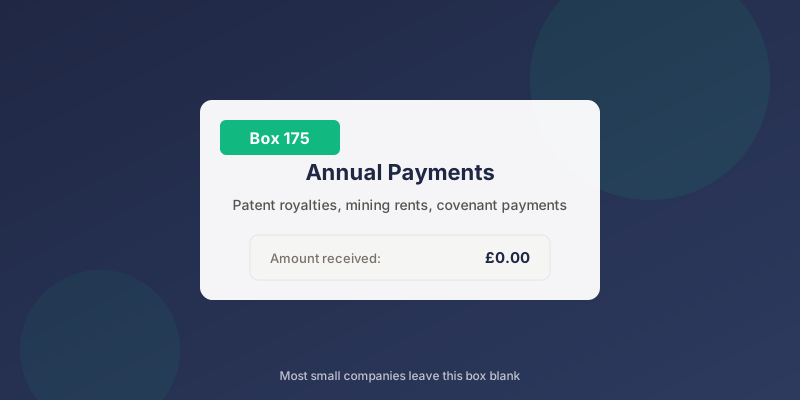
Box 175 on the CT600 is for annual payments received. This is an uncommon entry for most small companies, but understanding when it applies helps you complete your return correctly.
What Goes in Box 175?
Box 175 captures annual payments received by your company. Annual payments are specific types of income paid under a legal obligation, including:
- Patent royalties
- Mining rents and royalties
- Payments under certain deeds of covenant
- Some annuity payments
What Are Annual Payments?
Annual payments are payments that:
- Are recurring (paid annually or periodically)
- Are paid under a legal obligation (not voluntary)
- Are "pure income" (not payment for goods or services)
- Would be taxable as income in the recipient's hands
Examples of Annual Payments
| Type | Box 175? |
|---|---|
| Patent royalties received | Yes |
| Mining royalties | Yes |
| Payments under deeds of covenant | Yes |
| Certain annuities | Yes |
| Interest received | No (different treatment) |
| Dividends received | No (not taxable) |
| Rent received | No (Box 190) |
When Box 175 Applies
Your company should include figures in Box 175 if it receives:
Patent Royalties
If your company owns patents and licenses them to others:
- Royalty payments for patent use go in Box 175
- These are taxable as income
- Payer may deduct basic rate tax at source
Mining/Mineral Royalties
If your company owns mineral rights:
- Payments for extraction rights
- Usually applies to land with mineral deposits
Deed of Covenant Payments
Payments received under a deed of covenant:
- Legal obligation to pay
- Not commercial payments for services
Box 175 vs Other Income Boxes
| Income Type | CT600 Box |
|---|---|
| Trading income | Box 150 |
| Annual payments | Box 175 |
| Non-UK dividends | Box 180 |
| Property income | Box 190 |
| Interest received | Box 180 or separate |
Tax Treatment of Annual Payments
Annual payments are:
- Included in total profits for Corporation Tax
- May have basic rate tax deducted at source
- Credit given for tax deducted
If Tax Was Deducted at Source
If the payer deducted tax:
- Gross up the payment received
- Enter gross amount in Box 175
- Claim credit for tax deducted (separate boxes)
- Received £800 after 20% tax deduction
- Gross amount = £800 ÷ 0.8 = £1,000
- Box 175 = £1,000
- Tax credit = £200
Most Companies: Box 175 = Zero
The vast majority of small limited companies will have:
- No patent income
- No mining royalties
- No deed of covenant receipts
Related Boxes in This Section
| Box | Description |
|---|---|
| 150 | Gross trading income |
| 155 | Gross profit |
| 160 | Net trading profit |
| 165 | Trading profits |
| 170 | Trading losses |
| 175 | Annual payments (this box) |
| 180 | Non-UK dividends |
| 185 | Income from which tax has been deducted |
Common Questions
Do I include interest received?
No. Interest received has different treatment and isn't entered in Box 175. Interest is usually a loan relationship and goes elsewhere on the CT600.
What about software licensing fees?
Software licensing fees are usually trading income (Box 150), not annual payments. Box 175 is specifically for patent royalties and similar items.
My company receives royalties from a book/music - where does that go?
Copyright royalties (books, music, software) are typically trading income in Box 150 if you're in the business of creating such works. Patent royalties (inventions) may go in Box 175.
When Using TinyTax
TinyTax handles income categorisation automatically:
- Enter your income in the appropriate sections
- The software allocates to correct boxes
- Most users won't need to enter anything for annual payments
Related Articles
Need Help?
TinyTax guides you through income entry and automatically populates the correct CT600 boxes. For most small companies, you won't need to worry about Box 175.
Start Your CT600 Filing →