Company Tax Rate UK: Current Rates and Thresholds
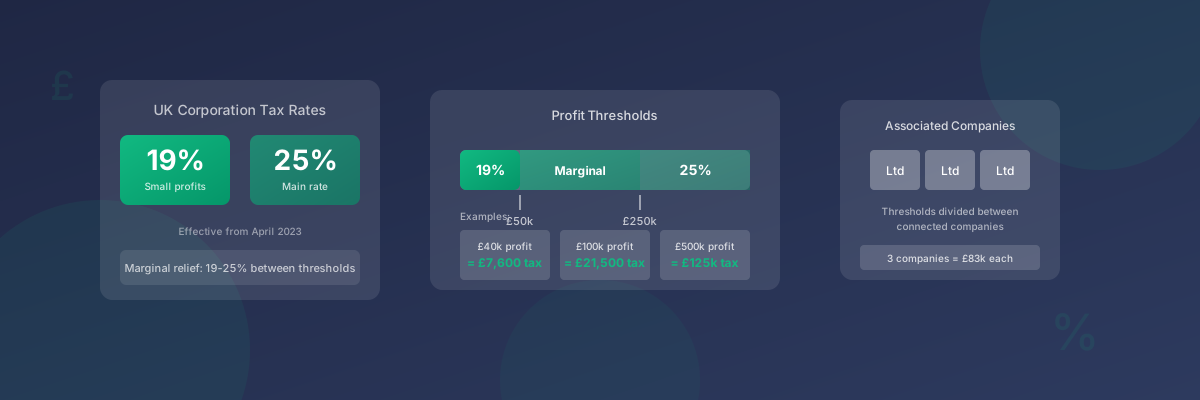
Understanding what rate of corporation tax your company pays is essential for financial planning. Since April 2023, the UK has used a two-rate system based on your company's taxable profits.
Current Corporation Tax Rates (2024/25)
| Profit Level | Tax Rate | Rate Name |
|---|---|---|
| £0 to £50,000 | 19% | Small profits rate |
| £50,001 to £250,000 | 19-25% | Marginal relief |
| Over £250,000 | 25% | Main rate |
Small Profits Rate (19%)
If your company's taxable profits are £50,000 or less, you pay corporation tax at 19%.
Example Calculation
| Amount | |
|---|---|
| Taxable profit | £40,000 |
| Tax rate | 19% |
| Corporation tax | £7,600 |
Main Rate (25%)
If your company's taxable profits exceed £250,000, you pay corporation tax at 25%.
Example Calculation
| Amount | |
|---|---|
| Taxable profit | £500,000 |
| Tax rate | 25% |
| Corporation tax | £125,000 |
Marginal Relief (£50,001 to £250,000)
If your profits fall between the two thresholds, you don't jump straight from 19% to 25%. Instead, marginal relief creates a gradual transition.
How Marginal Relief Works
The formula is:
Marginal Relief = (Upper Limit - Profits) × (Profits - Lower Limit) / Profits × Fraction
Where:
- Upper limit = £250,000
- Lower limit = £50,000
- Fraction = 3/200 (0.015)
Effective Tax Rates
| Taxable Profit | Effective Rate | Tax Payable |
|---|---|---|
| £50,000 | 19.00% | £9,500 |
| £75,000 | 20.50% | £15,375 |
| £100,000 | 21.50% | £21,500 |
| £150,000 | 22.75% | £34,125 |
| £200,000 | 23.75% | £47,500 |
| £250,000 | 25.00% | £62,500 |
Marginal Rate
Within the £50,001 to £250,000 band, the marginal rate on additional profit is 26.5%. This means each extra pound of profit in this band costs 26.5p in tax—higher than the main rate.
This can affect decisions about extracting profit vs. keeping money in the company.
Associated Companies
If your company has associated companies, the profit thresholds are divided between them.
What Counts as Associated?
Companies are associated if they're under common control—typically where the same person or group controls both companies.
Dormant companies and certain holding company structures may not count.
How Thresholds Are Divided
| Number of Associated Companies | Upper Limit | Lower Limit |
|---|---|---|
| 1 (just your company) | £250,000 | £50,000 |
| 2 | £125,000 | £25,000 |
| 3 | £83,333 | £16,666 |
| 4 | £62,500 | £12,500 |
| 5 | £50,000 | £10,000 |
Historical Corporation Tax Rates
| Period | Main Rate | Small Profits Rate |
|---|---|---|
| April 2023 onwards | 25% | 19% (profits ≤£50k) |
| April 2017 - March 2023 | 19% | 19% (single rate) |
| April 2015 - March 2017 | 20% | 20% (single rate) |
| April 2014 - March 2015 | 21% | 20% |
| April 2011 - March 2014 | 23-26% | 20% |
Tax Planning Considerations
Staying Below the Lower Limit
If your profits are close to £50,000, consider:
- Maximising allowable expenses
- Bringing forward planned purchases
- Pension contributions (employer contributions are deductible)
The Marginal Band Decision
In the £50,001-£250,000 band, the 26.5% marginal rate can influence:
- Whether to retain profits or pay dividends
- Timing of major purchases
- Pension vs. dividend extraction
Associated Company Planning
If you control multiple companies, ensure you're counting associated companies correctly. Getting this wrong can mean paying more tax than necessary—or facing HMRC penalties.
How Corporation Tax Is Calculated
Corporation tax is calculated on taxable profit, not accounting profit. The main adjustments are:
Add Back
- Depreciation (replaced by capital allowances)
- Entertainment costs
- Fines and penalties
- Dividends paid
Deduct
- Capital allowances
- Trading losses brought forward
- Certain reliefs (R&D, Patent Box)
When to Pay Corporation Tax
Corporation tax is due 9 months and 1 day after your accounting period ends.
Example: For a year ending 31 March 2025, pay by 1 January 2026.
Companies with profits over £1.5 million must pay in quarterly instalments instead.
See our guide on how to pay corporation tax.
File Your Company Tax Return
Once you know your tax rate and liability, you need to file a Company Tax Return (CT600) with HMRC.
TinyTax calculates your corporation tax automatically, including marginal relief, and files your return.
File your company tax return with TinyTax →
Related Guides
- Corporation Tax Explained
- Company Tax Return: Complete Guide
- How to Pay Corporation Tax
- Limited Company Tax Guide