Corporation Tax Explained
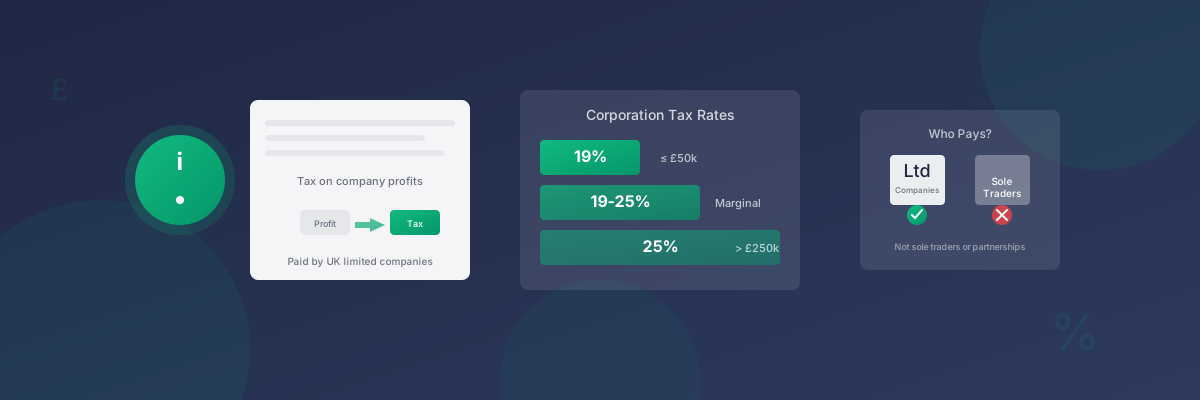
Corporation tax is the tax UK limited companies pay on their profits. If you run a limited company, understanding how corporation tax works is essential for managing your finances and staying compliant with HMRC.
What Is Corporation Tax?
Corporation tax is a tax on the profits of UK limited companies. It's similar to income tax for individuals, but it applies to companies instead of people.
Your company pays corporation tax on:
- Trading profits (income minus allowable expenses)
- Investment income
- Capital gains (profits from selling assets)
Who Pays Corporation Tax?
Corporation tax applies to:
- UK limited companies (Ltd)
- Foreign companies with a UK branch or office
- Clubs, societies, and associations that make a profit
- Housing associations and co-operatives
Current Corporation Tax Rates
Since April 2023, the UK has a two-rate system based on your company's taxable profits:
| Profit Level | Tax Rate | Rate Name |
|---|---|---|
| Up to £50,000 | 19% | Small profits rate |
| Over £250,000 | 25% | Main rate |
| £50,001 to £250,000 | 19-25% | Marginal relief applies |
Small Profits Rate (19%)
If your company's taxable profits are £50,000 or less, you pay corporation tax at 19%.
Example: £40,000 profit × 19% = £7,600 corporation tax
Main Rate (25%)
If your company's taxable profits exceed £250,000, you pay corporation tax at 25%.
Example: £300,000 profit × 25% = £75,000 corporation tax
Marginal Relief (£50,001 to £250,000)
If your profits fall between £50,000 and £250,000, you don't jump straight to 25%. Instead, marginal relief gradually increases your effective tax rate.
The formula is complex, but the effect is a smooth transition from 19% to 25% as profits increase.
Example: A company with £100,000 profit pays an effective rate of around 21.5%, not the full 25%.
Associated Companies
If your company has associated companies (connected through common ownership), the profit thresholds are divided between them.
For example, if you have two associated companies, the small profits threshold becomes £25,000 each instead of £50,000.
How to Calculate Corporation Tax
The basic calculation is straightforward:
- Calculate taxable profit = Income - Allowable expenses - Capital allowances
- Apply the correct rate based on your profit level
- Deduct any reliefs you're entitled to
Allowable Expenses
You can deduct business expenses from your income before calculating tax, including:
- Staff costs (salaries, employer NI, pensions)
- Office costs (rent, utilities, insurance)
- Travel and accommodation for business purposes
- Professional fees (accountants, solicitors)
- Marketing and advertising
- Equipment and supplies
Capital Allowances
When you buy assets for your business (equipment, vehicles, machinery), you can claim capital allowances instead of deducting the full cost immediately.
The Annual Investment Allowance (AIA) lets you deduct up to £1 million of qualifying asset purchases from your profits in the year you buy them.
When Is Corporation Tax Due?
There are two key deadlines to remember:
| Deadline | Timeframe |
|---|---|
| Pay corporation tax | 9 months and 1 day after accounting period ends |
| File company tax return | 12 months after accounting period ends |
- Payment deadline: 1 January 2026
- Filing deadline: 31 March 2026
Filing Your Company Tax Return (CT600)
Every company must file a company tax return (CT600) with HMRC, even if:
- You made a loss
- You have no tax to pay
- Your company is dormant
- Your company accounts
- Tax computations showing how you calculated your tax
What If You Don't Pay?
HMRC charges interest on late payments from the day after your deadline until you pay. The interest rate changes periodically.
If you file your company tax return late, you'll also face penalties:
- 1 day late: £100
- 3 months late: Another £100
- 6 months late: 10% of unpaid tax (minimum £300)
- 12 months late: Another 10% of unpaid tax (minimum £300)
Corporation Tax vs Other Taxes
| Tax | Who Pays | What It's On |
|---|---|---|
| Corporation tax | Limited companies | Company profits |
| Income tax | Individuals | Personal income (salary, dividends) |
| National Insurance | Employees and employers | Employment income |
| VAT | VAT-registered businesses | Sales of goods/services |
Getting Help with Corporation Tax
Filing your corporation tax return doesn't have to be complicated. TinyTax makes it simple for micro companies to file their CT600 affordably.
File your company tax return with TinyTax →
Related Guides
- Company Tax Return: Complete Guide
- Company Tax Rate UK
- How to Pay Corporation Tax
- Company Tax Return Deadlines