Accounting for IT Consultants
Running your IT consultancy through a limited company gives you control over how you structure your income, what you claim as expenses, and how much corporation tax you pay. But it also means taking on director-level responsibilities — filing a company tax return each year, keeping proper records, and understanding how IR35 affects your contracts.
IT consultants operating through a limited company need to keep bookkeeping records, file annual company accounts with Companies House, and submit a corporation tax return to HMRC within nine months of their accounting year end. The main areas to focus on are claimable expenses, IR35 status for each contract, and how to pay yourself tax-efficiently through a mix of salary and dividends.
Key takeaways
- IT consultants using a limited company must file a company tax return with HMRC each year and submit annual accounts to Companies House
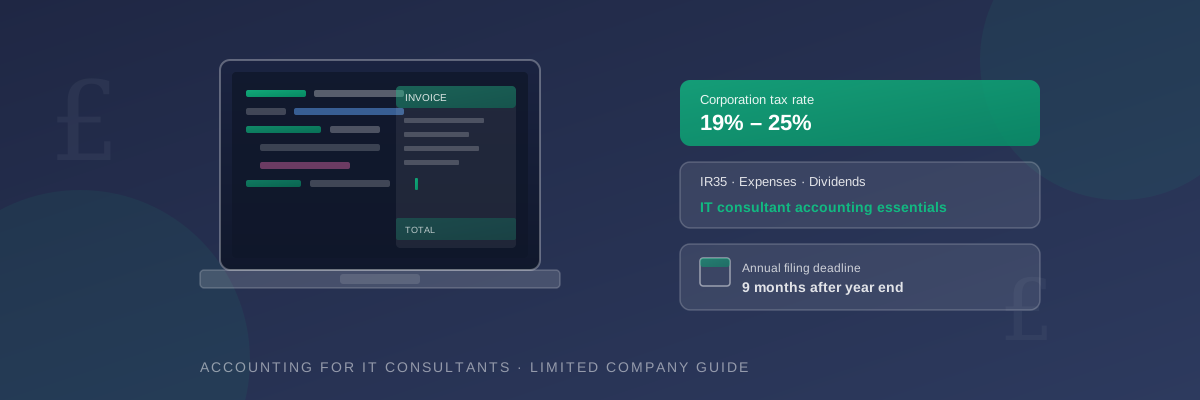
- Corporation tax is 19% on profits up to £50,000 and 25% on profits above £250,000, with marginal relief between those thresholds (GOV.UK)
- Common claimable expenses include hardware, software licences, broadband, home office costs, and professional subscriptions
- Each contract must be assessed for IR35 — if inside IR35, most of the contract value is treated as employment income
- Paying yourself through a combination of salary and dividends is usually the most tax-efficient approach
What accounting does an IT consultant need to do?
Operating through a limited company means the company — not you personally — earns the money and pays corporation tax on its profits. Your responsibilities as a director include:
- Bookkeeping: recording income and expenditure throughout the year
- Annual accounts: filing a set of statutory accounts with Companies House (usually nine months after your accounting year end)
- Corporation tax return (CT600): reporting the company's profits and calculating the tax owed to HMRC (also nine months after year end)
- Payroll: if you pay yourself a salary, running monthly PAYE and reporting to HMRC via Real Time Information (RTI)
- Self Assessment: filing a personal tax return each year to report salary, dividends, and any other income
What expenses can IT consultants claim?
Expenses that are wholly and exclusively for business purposes can be deducted from your company's income before calculating corporation tax. For IT consultants, common claimable expenses include:
| Expense | Notes |
|---|---|
| Hardware | Laptops, monitors, keyboards, servers — capital items may qualify for the Annual Investment Allowance |
| Software licences | Development tools, design software, productivity apps |
| Professional subscriptions | IEEE membership, cloud service subscriptions, technical reference tools |
| Broadband and phone | Business proportion if also used personally |
| Home office costs | Either a flat rate (£6/week) or a proportion of actual costs |
| Training and courses | Technical certifications, conferences relevant to your work |
| Professional services | Accountancy fees, legal advice related to business matters |
| Business travel | Transport and accommodation for client site visits |
What you cannot claim: Personal expenses, clothing (unless a branded uniform or protective gear), commuting to your regular workplace, and any cost with a significant personal element.
How does IR35 affect IT consultants?
IR35 is the legislation designed to prevent disguised employment — where a worker provides services through a limited company but is effectively working like an employee of the client.
Since April 2021, medium and large private-sector clients are responsible for determining your IR35 status. If your contract is assessed as inside IR35:
- The client deducts income tax and National Insurance before paying your company
- Your company receives the net amount
- The income is treated as employment income for tax purposes
- You cannot claim most business expenses against that contract income
Key IR35 factors: The status determination turns on three main tests — substitution (can you send a qualified replacement?), control (does the client direct how and when you work?), and mutuality of obligation (are both parties committed to ongoing work?). Many IT consultants have their contracts reviewed by a specialist to confirm outside-IR35 status before starting an engagement.
For IT contractors and freelancers working across multiple contracts, our tax guide for freelancers with a limited company covers the wider picture of tax-efficient operating.
How do IT consultants pay themselves?
Most IT consultants pay themselves through a combination of salary and dividends:
Salary: Many directors set their salary at or near the National Insurance Primary Threshold. A small salary creates an NI entitlement year for state pension purposes and is deductible from company profits, reducing your corporation tax bill.
Dividends: Paid from company profits after corporation tax. Dividends carry their own (lower) tax rates and do not attract National Insurance. The first £500 of dividend income per tax year is covered by the dividend allowance and is tax-free.
This combination is more tax-efficient than a high salary because you avoid National Insurance on the dividend income. Inside-IR35 contracts reduce or eliminate this benefit — which is why IR35 status matters so much to IT consultants.
What bookkeeping records do IT consultants need?
Your company must keep adequate records to support its tax return. In practice, this means:
- Invoices raised to clients (every invoice you send)
- Purchase receipts for every expense claimed
- Bank statements for the company account
- Payroll records if you run a salary
- Dividend documentation — board minutes authorising each dividend and dividend vouchers for each payment
When do IT consultants need to file their company tax return?
Your corporation tax return must be filed with HMRC within 12 months of the end of your accounting period, and any tax owed must be paid within 9 months and one day after the year end. Companies House requires your annual accounts within 9 months of the year end.
If your accounting year ends on 31 March 2025 as an example:
- Accounts due at Companies House: 31 December 2025
- Corporation tax payment due: 1 January 2026
- CT600 due at HMRC: 31 March 2026
Frequently Asked Questions
Do IT consultants need an accountant?
Not legally — you can prepare and file your own accounts and company tax return. However, most IT consultants find a specialist contractor accountant saves more in tax than it costs in fees. An accountant familiar with IR35 and contractor structures can also help you avoid common and expensive mistakes, particularly around IR35 status determinations and dividend planning.
Can I claim my home broadband as a business expense?
Yes, the business proportion of your home broadband can be claimed. If you use broadband equally for business and personal use, you can claim 50% of the cost. If broadband is primarily for business, a higher proportion is defensible. Keep your bill as evidence for each year you make the claim.
What is the corporation tax rate for IT consultants?
Corporation tax is currently 19% on company profits up to £50,000 and 25% on profits above £250,000. Marginal relief applies between those thresholds. See the current rates on GOV.UK. These rates apply to accounting periods ending on or after 1 April 2023.
What happens to my limited company if I take a contract inside IR35?
Your company continues to exist and operate. The client deducts tax and National Insurance and pays the net deemed employment payment to your company, which then pays you. You can still take dividends from non-IR35 work or retained profits, but the inside-IR35 income itself cannot benefit from the dividend route and must be treated as employment income.
How long do I need to keep accounting records?
HMRC requires companies to keep records for at least six years from the end of the accounting period they relate to. If HMRC opens an enquiry into a return, you will need to produce the supporting records for that period, so keeping them organised and accessible is important.
Summary
Accounting for an IT consultancy through a limited company is manageable once you understand the moving parts: IR35 status for each contract, a tax-efficient salary and dividend structure, clear records of business expenses, and timely filing of accounts and your company tax return. Getting these right from the start means fewer surprises at year end and more of your earnings staying in your pocket.