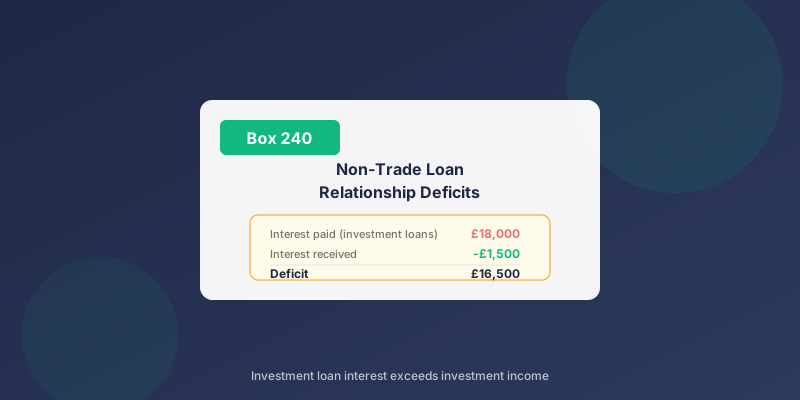
CT600 Box 240: Non-Trade Loan Relationship Deficits
Box 240 on the CT600 is for non-trade loan relationship deficits. This applies when your company has borrowing costs or interest payments that exceed non-trading loan income.
What Goes in Box 240?
Box 240 captures deficits from loan relationships that aren't part of your trade. This typically involves:
- Interest paid on non-trade borrowings
- Losses on non-trade debt investments
- Costs of managing investment loans
Understanding Loan Relationships
What Is a Loan Relationship?
A loan relationship exists when your company:
- Borrows money (debtor relationship)
- Lends money (creditor relationship)
- Has money relationships like bonds or debentures
Trade vs Non-Trade
| Type | Examples | Tax Treatment |
|---|---|---|
| Trade | Overdraft for working capital, loan to buy stock | Part of trading profits |
| Non-Trade | Loan to buy investment property, personal lending | Separate treatment |
When Box 240 Applies
Creating a Non-Trade Deficit
A deficit arises when:
``` Interest/costs paid on non-trade loans > Interest received on non-trade investments ```
Example Scenarios
Scenario 1: Investment Property Loan
- Interest paid on investment property mortgage: £15,000
- No non-trade interest received
- Non-trade deficit: £15,000 → Box 240
- Interest paid on investment loans: £20,000
- Interest received on company savings: £5,000
- Non-trade deficit: £15,000 → Box 240
- Interest received: £10,000
- Interest paid: £3,000
- No deficit (net profit of £7,000 goes elsewhere)
How Non-Trade Deficits Are Used
Relief Options
Non-trade deficits can be:
- Set against current year profits (all types)
- Carried back to previous periods
- Carried forward to future non-trade profits
- Surrendered as group relief
Order of Set Off
When claiming relief:
- First against any non-trade credits in the same period
- Then against other profits if claimed
- Any remainder carries forward
Calculating Box 240
Step-by-Step
- Identify all non-trade loan relationships
- Calculate debits (interest paid, costs)
- Calculate credits (interest received)
- If debits exceed credits = deficit
- Enter deficit amount in Box 240
Worked Example
| Item | Amount |
|---|---|
| Interest on investment property loan | £18,000 |
| Loan arrangement fees (capital) | £2,000 |
| Interest on company savings | (£1,500) |
| Non-trade deficit | £18,500 |
Trade Loans vs Non-Trade Loans
Trade Loan Characteristics
- Borrowing for trading purposes
- Working capital facilities
- Equipment finance for trade use
- Stock purchasing loans
Non-Trade Loan Characteristics
- Investment property mortgages
- Loans to acquire shares
- Personal loans to directors
- Investment borrowings
Related Boxes
| Box | Description |
|---|---|
| 235 | Total profits |
| 240 | Non-trade loan deficits (this box) |
| 245 | UK property business losses |
| 250 | Management expenses |
Interaction with Property Income
For buy-to-let companies:
- Property income goes in Box 190
- Mortgage interest may be non-trade
- Deficit in Box 240 can offset Box 190
- Property income (Box 190): £25,000
- Non-trade deficit (Box 240): £10,000
- Net taxable: £15,000
Most Small Companies: Box 240 = Zero
Typical small trading companies:
- Have trade-related borrowings only
- Bank overdrafts are for trading
- Any loans are to fund the business
- No investment property financing
Common Questions
My company has a bank overdraft - does interest go in Box 240?
Usually no. If the overdraft funds your trading activities, the interest is a trading expense (reduces Box 165), not a Box 240 item.
We have a buy-to-let property - where does mortgage interest go?
Mortgage interest on investment property typically creates a non-trade loan relationship:
- Interest paid → Non-trade debit
- If exceeds non-trade credits → Box 240 deficit
Can I choose whether a loan is trade or non-trade?
No. It depends on the purpose:
- Loan to buy trading equipment = trade
- Loan to buy investment property = non-trade
- The facts determine the classification
What about interest on director loans?
Interest paid on loans from directors:
- Usually trade if used for trade
- May be non-trade if used for investments
- Check the purpose of the borrowed funds
When Using TinyTax
TinyTax handles loan relationship calculations:
- Identify the purpose of each loan
- Trade loans: included in trading expenses
- Non-trade loans: separate calculation
- Any deficit flows to Box 240
Related Articles
- CT600 Box 235: Total Profits
- CT600 Box 245: Property Business Losses
- CT600 for Property Companies
- CT600 Boxes Explained
Need Help?
TinyTax guides you through loan relationship entries. For complex financing arrangements involving non-trade borrowings, consider consulting a tax specialist.
Start Your CT600 Filing →