CT600 Box 1: Company Type Explained
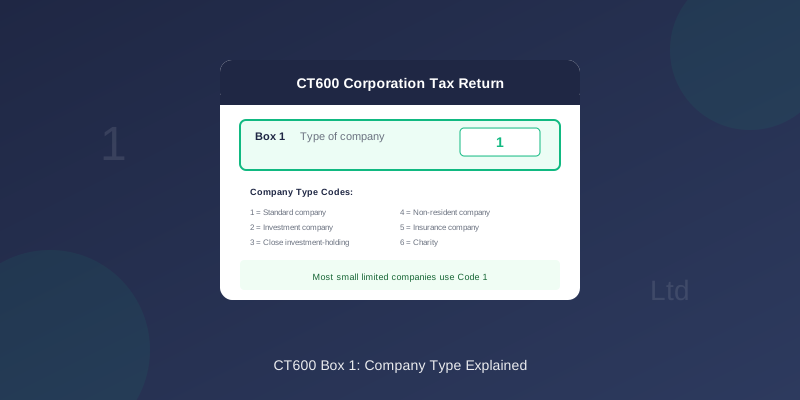
Box 1 on the CT600 asks for your company type. This determines which rules apply to your Corporation Tax calculation and what supplementary pages you may need.
What Goes in Box 1?
Box 1 requires a single digit code indicating your company type:
| Code | Company Type |
|---|---|
| 1 | Company not within any other category |
| 2 | Investment company |
| 3 | Close investment-holding company |
| 4 | Non-resident company |
| 5 | Insurance company |
| 6 | Charity |
| 7 | Unit trust |
| 8 | Open-ended investment company (OEIC) |
How to Choose Your Company Type
Code 1: Standard Company
Choose this if your company:
- Is a UK-registered limited company
- Trades or has trading income
- Doesn't fit other categories
- Is a typical small business
- IT consultancies
- Professional services firms
- Trading companies
- Property companies (non-investment)
- Manufacturing businesses
- Retail businesses
Code 2: Investment Company
Choose this if your company:
- Exists wholly or mainly to make investments
- Derives income primarily from investments
- Is not a close investment-holding company
Code 3: Close Investment-Holding Company
Choose this if your company:
- Is a close company (controlled by 5 or fewer participators)
- Exists wholly or mainly to hold investments
- Is not a trading company
Code 4: Non-Resident Company
Choose this if:
- The company is not UK-resident
- But has UK taxable presence (permanent establishment)
- Files CT600 for UK profits only
Code 5: Insurance Company
For authorised insurance companies. Specialist regime applies.
Code 6: Charity
For companies registered as charities. Special tax exemptions may apply.
Code 7: Unit Trust
For authorised unit trusts. Specialist regime applies.
Code 8: OEIC
For open-ended investment companies. Specialist regime applies.
Why Company Type Matters
Your company type affects:
Tax Rates
| Type | Small Profits Rate | Main Rate |
|---|---|---|
| Standard (1) | 19% (up to £50k) | 25% (over £250k) |
| Close Investment-Holding (3) | Not available | 25% on all profits |
| Others | Various special rules | Depends on category |
Required Supplementary Pages
Different company types need different supplements:
| Type | Supplementary Pages |
|---|---|
| Standard | Basic CT600 usually sufficient |
| Insurance | CT600I required |
| Charity | CT600E required |
| Group company | CT600C may be needed |
Available Reliefs
Some reliefs are restricted by company type:
- Group relief (must be group member)
- Consortium relief (specific rules)
- R&D credits (trading companies only)
Common Questions
What if my company does multiple things?
Choose based on the main activity:
- Trading is primary = Code 1
- Investment is primary = Code 2 or 3
What about property companies?
Property letting (rent):
- If main activity is lettings = Usually Code 1
- Rental income is taxed as property income, not trading
- This is trading = Code 1
- Profits are trading profits
What if I'm not sure?
For most small limited companies, Code 1 is correct. If you're unsure whether your company fits a special category, check with an accountant or HMRC.
Can I change the company type?
If your company's nature changes (e.g., stops trading and becomes investment-focused), update Box 1 accordingly for future returns.
How to Enter in TinyTax
TinyTax asks simple questions about your company and automatically selects the correct company type code:
- Answer questions about your company's activities
- TinyTax determines the appropriate code
- The correct value is entered in Box 1
- You can review in the CT600 preview
Related Boxes
After company type, the CT600 continues with:
| Box | Purpose |
|---|---|
| 2 | Registered company name |
| 3 | Company registration number |
| 4 | Tax district reference |
| 5 | Company UTR |
| 30-35 | Accounting period dates |
Common Mistakes
1. Choosing Investment Company When Trading
If you have trading income (even alongside investments), you're usually Code 1.
2. Confusion Over Property Companies
Property rental income doesn't make you an "investment company" for Box 1 purposes. Most landlords use Code 1.
3. Close Company vs Close Investment-Holding Company
Most small companies are "close" (few shareholders), but that doesn't mean Code 3. You're only Code 3 if investment-holding is the main purpose.
Related Articles
- CT600 Boxes Explained
- First CT600 Return Guide
- Dormant Company CT600
Need Help?
TinyTax automatically determines your company type based on your answers. No need to look up codes or interpret HMRC guidance - just answer simple questions about your business.
Start Your CT600 Filing →