How Do I Pay Corporation Tax?
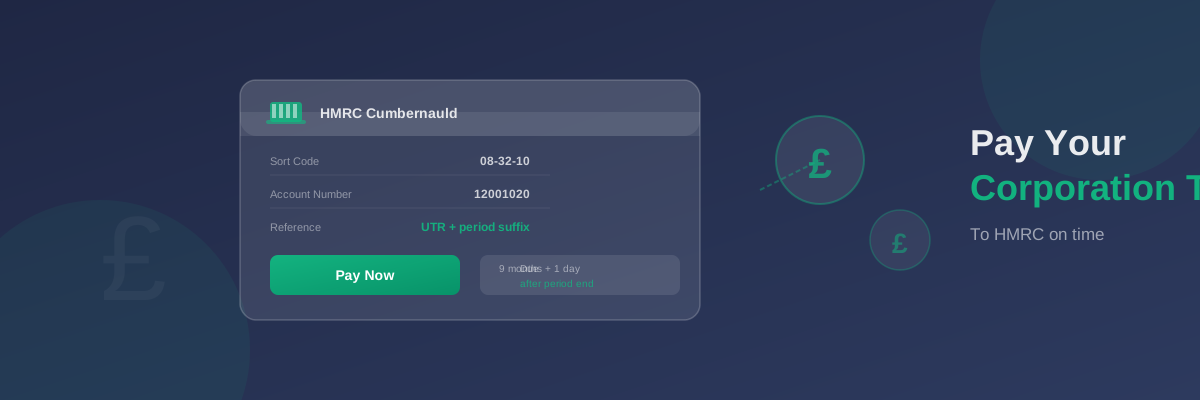
Corporation tax must be paid to HMRC separately from filing your company tax return. Most small and medium-sized companies pay the full amount in a single bank transfer, due 9 months and 1 day after their accounting period ends.
This guide covers when payment is due, how to make it, what reference to use, and what happens if you pay late or have overpaid.
When Is Corporation Tax Due?
For the majority of UK companies, corporation tax is due 9 months and 1 day after the end of the accounting period. This deadline is fixed — it applies whether or not you have filed your company tax return yet.
Example: If your accounting period ends on 31 March 2024, corporation tax is due by 1 January 2025.
This is separate from your CT600 filing deadline. You must submit your company tax return within 12 months of the accounting period ending — which means for many companies, the tax payment falls due before the return is actually filed. You will need to calculate your liability in advance and pay by the 9-month-plus-one-day deadline.
For a full summary of the key filing and payment dates, see company tax return deadlines explained.
How to Pay Corporation Tax
HMRC does not collect corporation tax automatically. You need to arrange a bank transfer using your corporation tax payment reference. HMRC does not send payment reminders before the deadline — it is your responsibility to pay on time.
Your Corporation Tax Payment Reference
Your payment reference is specific to each accounting period. It is typically your company's 10-digit Unique Taxpayer Reference (UTR) followed by a suffix that identifies the tax period. The full reference appears on:
- HMRC letters about your corporation tax account
- Your HMRC Business Tax Account at www.gov.uk/business-account
- Any CT603 payment notice HMRC may have issued
HMRC Bank Details
Pay by BACS, CHAPS, or Faster Payments to:
| Detail | Value |
|---|---|
| Sort code | 08-32-10 |
| Account number | 12001020 |
| Account name | HMRC Cumbernauld |
Always quote your corporation tax payment reference in the payment details. Do not use your company registration number, VAT registration number, or PAYE reference.
Payment Methods
Online banking or banking app (recommended): Use the bank details above and input your payment reference exactly as it appears in your HMRC correspondence. Faster Payments typically arrive at HMRC within hours.
CHAPS: Same-day transfers — useful if you are paying close to the deadline. Your bank may charge a fee.
Debit card via HMRC's website: You can pay at www.gov.uk/pay-corporation-tax using a debit card. Note that HMRC does not accept credit card payments for corporation tax.
Direct Debit: HMRC offers a variable Direct Debit scheme for corporation tax, but it must be set up in advance through HMRC Online Services. You cannot arrange it on the day payment is due. You specify the amount to be collected, so you will still need to calculate your liability before the payment date.
Cheque: Post a cheque payable to 'HM Revenue and Customs only', with your payment reference written on the back. Allow at least three working days before the deadline for postal and processing delays. Cheques are the slowest option and not recommended for payments close to the due date.
Checking Your Payment Has Been Received
After making a payment, allow a few working days for it to appear in your HMRC Business Tax Account. If it does not appear within five working days, check that you used the correct bank details and payment reference. If the issue persists, contact HMRC's Corporation Tax helpline with your bank's transaction reference as proof of payment.
Large Companies: Quarterly Instalment Payments
If your company's taxable profits exceed £1.5 million, you are generally required to pay corporation tax in quarterly instalments rather than one lump sum at 9 months and 1 day.
Instalments fall in months 7, 10, 13, and 16 of the accounting period. This means the first payment is due during the accounting period itself — before your accounts are finalised and often before you know the exact profit figure. Companies in this regime estimate their liability and adjust in later instalments.
The £1.5 million threshold is divided by the number of associated companies plus one. If your company has associates, the instalment threshold may be lower than you expect. See payment on account for large companies for a full explanation.
For most owner-managed businesses and small limited companies, quarterly instalments do not apply.
What If I Pay Late?
HMRC charges late payment interest from the day after corporation tax was due. Interest accrues daily on the unpaid balance at a rate linked to the Bank of England base rate — there is no grace period.
Unlike VAT, HMRC does not impose fixed surcharge penalties for late corporation tax payment. However, interest accumulates until the full balance is cleared.
If you cannot pay the full amount on time, pay what you can by the deadline. Interest accrues on the outstanding balance, so a partial payment reduces the ongoing charge. If you are struggling to pay, contact HMRC's Business Payment Support Service before the deadline. In many cases HMRC will agree a Time to Pay arrangement, allowing payment in instalments.
What If I Have Overpaid?
If you have overpaid corporation tax — for example because you amended your return, claimed additional reliefs, or your final profit was lower than estimated — HMRC will repay the overpayment. You can request this through HMRC Online Services, or in some cases HMRC will issue the refund automatically once your return is processed.
HMRC pays repayment interest on overpaid amounts. The repayment interest rate is lower than the late payment rate, so deliberately overpaying is not an efficient cash management strategy.
How Much Corporation Tax Do I Owe?
The amount depends on your taxable profit for the accounting period. This is different from the net profit in your annual accounts — adjustments are made for disallowed expenses, capital allowances, and other reliefs.
From 1 April 2023, companies with profits of £50,000 or less pay at the small profits rate of 19%. Companies with profits above £250,000 pay at the main rate of 25%. Companies with profits between £50,000 and £250,000 may qualify for Marginal Relief, which provides a graduated effective rate between the two. The thresholds are reduced proportionately for short accounting periods and adjusted for the number of associated companies.
For a full breakdown, see corporation tax rates explained.
Summary
Corporation tax is due 9 months and 1 day after the end of your accounting period. Pay by bank transfer to HMRC Cumbernauld using your corporation tax payment reference — HMRC will not send a reminder. Late payment attracts interest from the day after the deadline. Large companies with profits above £1.5 million must pay in quarterly instalments instead. For a full list of key dates including your CT600 filing deadline, see company tax return deadlines.