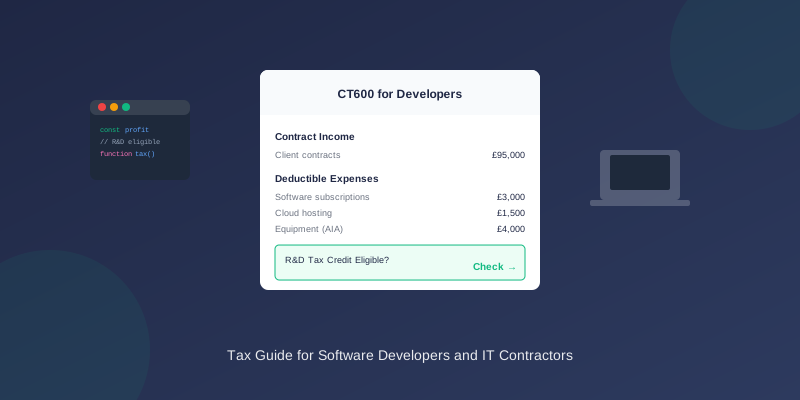
CT600 for Software Developers: Complete Guide
If you run your software development business through a UK limited company, you need to file a CT600 Corporation Tax return. This guide covers everything specific to developers and tech freelancers.
Overview: Software Development as a Limited Company
Running your development business through a company means:
- Corporation Tax on profits (19-25%)
- CT600 required within 12 months of year end
- Different expense rules than employment
- Potential R&D tax credit eligibility
Key Tax Considerations for Developers
1. Income Recognition
Your turnover for Box 145 includes:
- Client project fees
- Retainer payments
- Support and maintenance income
- Consulting fees
- Licence or royalty income
- SaaS subscription revenue (if applicable)
2. IR35 Considerations
If you're a contractor:
Outside IR35:
- Take salary + dividends
- Normal CT600 filing
- Company pays Corporation Tax on profits
- Client deducts tax and NIC before payment
- Company receives net amount
- Different accounting treatment
3. R&D Tax Credits
Software development may qualify for R&D relief:
Qualifying activities:
- Developing new software products
- Solving technological uncertainties
- Creating novel algorithms
- Overcoming technical challenges
- Enhanced deduction (86% for profit-making SMEs)
- Cash credit if loss-making
- Reduce Corporation Tax bill
Calculating Your CT600
Box 145: Turnover
Report all fee income:
``` Client A contracts £80,000 Client B retainer £24,000 Support agreements £6,000 Total turnover £110,000 ← Box 145 ```
Operating Expenses
Typical developer expenses:
| Category | Example Amount |
|---|---|
| Equipment (if not capital) | £2,000 |
| Software subscriptions | £3,000 |
| Cloud hosting | £1,500 |
| Internet/phone | £1,200 |
| Home office | £2,400 |
| Training/courses | £1,500 |
| Professional fees | £1,500 |
| Insurance | £800 |
| Travel | £1,000 |
| Other | £1,100 |
| Total expenses | £16,000 |
Box 165: Trading Profit
``` Turnover £110,000 Less: Expenses (£16,000) Trading profit £94,000 ← Box 165 ```
Developer-Specific Expenses
Fully Deductible
Technology:
- IDE licences (JetBrains, VS Code extensions)
- GitHub/GitLab subscriptions
- Cloud services (AWS, Azure, GCP)
- Testing tools
- Project management (Jira, Trello)
- Design tools (Figma, Sketch)
- Domain registrations
- SSL certificates
- Training courses
- Udemy/Pluralsight subscriptions
- Technical books
- Conference tickets
- Professional memberships (BCS, etc.)
- Accountancy software (FreeAgent, Xero)
- Invoicing tools
- Time tracking apps
- Communication tools (Slack, Zoom)
- Professional indemnity insurance
- Proportion of rent/mortgage interest
- Proportion of utilities
- Proportion of council tax
- Or simplified £6/week (£312/year) from HMRC
Capital Allowances
Equipment purchases get 100% relief through AIA:
| Item | Treatment |
|---|---|
| Laptop/desktop | 100% AIA |
| Monitors | 100% AIA |
| Keyboard/mouse | 100% AIA |
| Desk and chair | 100% AIA |
| Networking equipment | 100% AIA |
R&D Tax Credits for Developers
What Qualifies?
Software development that involves:
- Technological uncertainty - Not knowing if/how something can be done
- Seeking advancement - Going beyond existing solutions
- Technical challenge - Requires experimentation
- Building new frameworks or libraries
- Developing novel algorithms
- Creating new data processing methods
- Solving complex integration challenges
- Building AI/ML solutions
- Performance optimisation breakthroughs
- Routine development work
- Using existing frameworks conventionally
- Bug fixing
- Minor feature additions
- General maintenance
R&D Benefit Calculation
For profitable SMEs (2024/25):
``` R&D expenditure £50,000 Enhanced deduction (86%) £43,000 Tax saving at 25% £10,750 ```
For loss-making SMEs:
- Cash credit available
- Complex calculation based on losses
Claiming R&D on CT600
R&D is claimed on the CT600 through:
- Supplementary pages CT600I, CT600J, or CT600K
- Additional Information Form (AIF) required
- Consider professional help for first claim
Example: Complete Developer CT600
DevCo Ltd - Software Development Contractor
Year ended 31 March 2025
| Description | Amount |
|---|---|
| Contract income | £95,000 |
| Other income | £5,000 |
| Total turnover | £100,000 |
| Software subscriptions | £2,400 |
| Cloud hosting | £1,800 |
| Equipment depreciation | £0 (use CA) |
| Home office | £2,400 |
| Training | £1,200 |
| Professional fees | £1,800 |
| Insurance | £650 |
| Other | £1,750 |
| Total expenses | £12,000 |
| Trading profit | £88,000 |
- MacBook Pro: £3,000
- Monitor setup: £1,500
- Total: £4,500 (100% AIA)
Corporation Tax (approx): £17,500
Taking Money Out
Salary Strategy
Most developers take:
``` Salary: £12,570 (personal allowance) Employer's NIC: £0 (below threshold) ```
This gives:
- National Insurance credits
- Deductible expense for company
- No tax on salary
Dividend Strategy
Remaining profits can be:
``` Trading profit £88,000 Less: Corporation Tax (£17,500) Less: Salary (£12,570) Available for dividends £57,930 ```
Dividend tax rates (2024/25):
- £500 allowance at 0%
- Basic rate: 8.75%
- Higher rate: 33.75%
- Additional rate: 39.35%
Retained Profits
You don't have to extract all profits:
- Leave money in company for growth
- Pay down business loans
- Build cash reserves
- Only pay 19-25% (not dividend tax too)
IR35 Impact on CT600
If caught by IR35:
Before IR35:
- Company receives gross £100,000
- Pays Corporation Tax on profit
- Director takes salary + dividends
- Client deducts tax/NIC
- Company receives net (much less)
- Different CT600 calculation
Record Keeping
Essential records for developers:
- Contracts - All client agreements
- Invoices - Sent and received
- Bank statements - All transactions
- Equipment receipts - For capital allowances
- Subscription records - Monthly/annual tools
- Mileage logs - If claiming travel
- Time records - For R&D claims especially
Common Mistakes
1. Missing Equipment Claims
Wrong: Expensing equipment directly Right: Claim capital allowances for 100% relief
2. Ignoring R&D Credits
Wrong: Not claiming qualifying development work Right: Review projects for R&D eligibility
3. Poor Home Office Records
Wrong: Claiming without calculation Right: Keep utility bills, calculate business proportion
4. Missing Training Costs
Wrong: Not claiming course fees Right: Training for current trade is deductible
When Using TinyTax
TinyTax makes developer CT600s straightforward:
- Import trial balance from accounting software
- Handles capital allowances correctly
- Calculates trading profit accurately
- Clear, understandable output
Related Articles
- CT600 for IT Consultants: Complete Guide
- CT600 Boxes Explained: Understanding Every Field
- How to File a CT600 Online: Step-by-Step Guide
Need Help?
Software developers have specific tax opportunities like R&D credits and equipment allowances. TinyTax guides you through the CT600 process.
Start Your CT600 Filing →