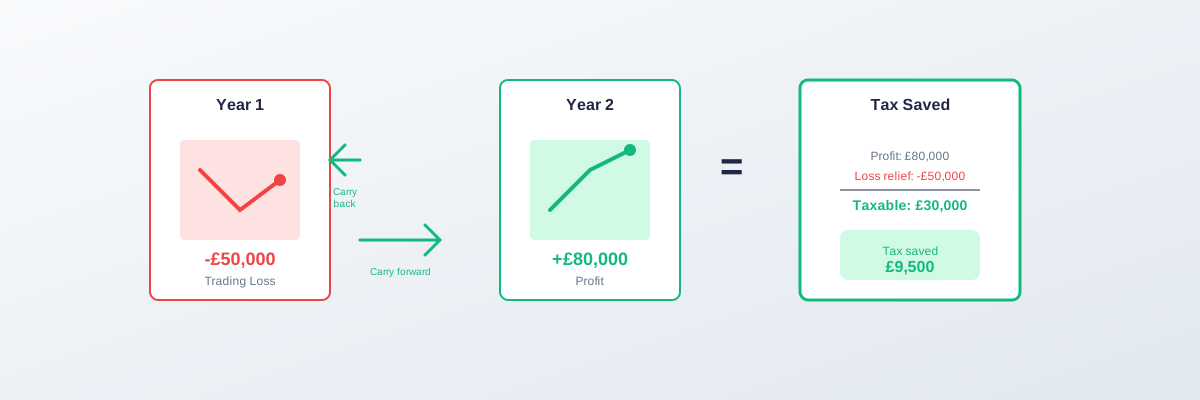
Corporation Tax Losses: Carrying Forward and Back
Making a loss isn't ideal, but understanding how to use that loss can save significant tax in other years. This guide explains corporation tax loss relief.
How Loss Relief Works
When your company makes a trading loss, you have options:
| Option | What It Does |
|---|---|
| Carry forward | Use against future profits |
| Carry back | Claim against previous year's profits |
| Group relief | Transfer to profitable group companies |
| Offset against other income | Use against current year non-trading income |
Types of Losses
Trading Losses
Losses from your company's main business activity. These have the most flexible relief options.
Non-Trading Losses
Losses from:
- Property (rental losses)
- Capital losses (asset disposals)
- Non-trade loan relationships (investment losses)
Capital Losses
From selling assets for less than cost. Can only offset capital gains, not trading profits.
Carrying Losses Forward
How It Works
If you make a loss this year, you can carry it forward to reduce profits in future years.
Example:
- Year 1: Loss of £20,000
- Year 2: Profit of £50,000
- Taxable profit Year 2: £50,000 - £20,000 = £30,000
Rules for Carried Forward Losses
Pre-April 2017 losses:
- Can only offset trading profits from the same trade
- No time limit
- Can offset against total profits
- But subject to the "loss restriction" (see below)
The Loss Restriction
For accounting periods from 1 April 2017:
| Your Profits | Maximum Offset |
|---|---|
| Up to £5 million | 100% |
| Over £5 million | £5m + 50% of excess |
Carrying Losses Back
How It Works
Carry a trading loss back to offset profits from the previous 12 months.
Example:
- Year 1: Profit of £40,000, paid £7,600 tax
- Year 2: Loss of £30,000
- Carry back: Recover £30,000 × 19% = £5,700 tax
Rules for Carry Back
| Aspect | Rule |
|---|---|
| Period | Previous 12 months |
| Limit | £2 million (per period) |
| Timing | Claim in the loss-making year's CT600 |
Extended Carry Back (COVID Measure)
For accounting periods ending between 1 April 2020 and 31 March 2022:
- Losses could be carried back up to 3 years
- This was a temporary measure (now ended)
How to Claim Loss Relief
On Your CT600
Carrying forward (no immediate action needed):
- Note the loss in your records
- Claim when you have profits to offset
- Box 275: Trading losses used against trading profits
- Box 285: Non-trading deficits used
- Complete supplementary page CT600A
- Shows the loss and which period you're carrying back to
Timing
| Claim Type | When to Claim |
|---|---|
| Carry forward | When using (future CT600) |
| Carry back | In loss-making year's CT600 |
| Group relief | Both companies must claim |
Practical Examples
Example 1: Simple Carry Forward
Year 1: Loss £15,000 Year 2: Profit £25,000
| Year 2 Calculation | Amount |
|---|---|
| Profit | £25,000 |
| Less: Loss b/f | (£15,000) |
| Taxable profit | £10,000 |
| Tax at 19% | £1,900 |
Example 2: Carry Back
Year 1: Profit £50,000, tax paid £9,500 Year 2: Loss £35,000
| Carry Back Claim | Amount |
|---|---|
| Year 1 profit | £50,000 |
| Less: Loss carried back | (£35,000) |
| Revised profit | £15,000 |
| Revised tax | £2,850 |
| Tax to recover | £6,650 |
Example 3: Mixed Approach
Year 1: Profit £20,000 Year 2: Loss £45,000
| Decision | Approach |
|---|---|
| Carry back £20,000 | Recover £3,800 tax |
| Carry forward £25,000 | Use when profitable |
Strategic Considerations
When to Carry Back
- You need cash now (refund)
- Tax rates were higher in previous year
- Uncertainty about future profits
When to Carry Forward
- Expecting higher profits (and potentially higher rates) in future
- Don't need immediate cash
- Previous year's profits were low anyway
Planning Points
- Consider marginal relief - Rates between £50k-£250k profit mean timing matters
- Time limits - Carry back claims must be made within 2 years
- Group relief - May be more valuable than carry forward
Property Losses
Different Rules Apply
Property rental losses can:
- Offset against other property income (same year)
- Carry forward against future property income
- Cannot offset against trading profits
Example
Trading profit: £30,000 Property loss: £10,000
The property loss cannot reduce the £30,000 trading profit. It carries forward against future property income only.
Capital Losses
Very Restricted
Capital losses (from selling assets) can only:
- Offset capital gains in the same year
- Carry forward against future capital gains
- Cannot offset income profits
Example
Trading profit: £50,000 Capital loss: £20,000
The capital loss cannot reduce the £50,000 trading profit. It can only be used against capital gains.
Common Mistakes
1. Forgetting to Claim
Losses don't automatically reduce future tax. You must claim them on your CT600.
2. Losing Track
Keep records of all losses and when they arose. Different rules apply to different periods.
3. Wrong Type Offset
Trying to use property losses against trading profits, or capital losses against income.
4. Missing Time Limits
Carry back claims must be made within 2 years. After that, you can only carry forward.
5. Not Considering Groups
If you have group companies, surrendering losses might give quicker relief than carrying forward.
Frequently Asked Questions
How long can I carry losses forward?
Indefinitely for most trading losses. There's no time limit.
What if my company closes?
Terminal losses (in the final 12 months of trading) can be carried back up to 3 years.
Can I choose how much to carry back?
Yes. You can carry back part and keep part for the future. Consider which gives the best tax outcome.
Do losses ever expire?
Generally no, but:
- If the trade changes significantly, losses may be restricted
- If ownership changes, anti-avoidance rules may apply
What records should I keep?
- CT600s showing losses
- Computation showing loss calculation
- Working showing remaining losses to carry forward
Summary
| Loss Type | Carry Forward | Carry Back | Special Rules |
|---|---|---|---|
| Trading | Yes (indefinite) | 12 months | Most flexible |
| Property | Yes | No | Only vs property |
| Capital | Yes | No | Only vs gains |
Related guides:
- CT600 Filing Guide
- CT600 Boxes Explained