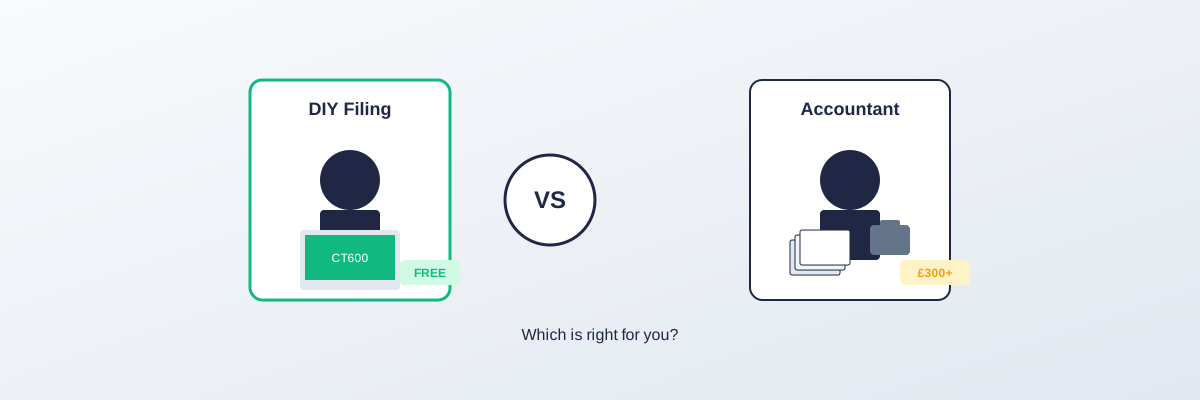
Accountant vs DIY CT600: Which Is Right for You?
Every UK company must file a CT600, but should you pay an accountant or do it yourself? The answer depends on your company's complexity, your confidence with numbers, and what you value most.
The Quick Decision
| Factor | Hire Accountant | DIY Filing |
|---|---|---|
| Company type | Complex | Simple |
| Your time | Limited | Available |
| Your confidence | Low | Medium-High |
| Budget | Flexible | Tight |
| Complexity | R&D, groups, losses | Trading, dormant |
Cost Comparison
Accountant Costs
| Service Level | Typical Cost |
|---|---|
| CT600 only | £200-400 |
| CT600 + accounts | £400-800 |
| Full service (bookkeeping included) | £800-2,000+ |
DIY Costs
| Option | Cost |
|---|---|
| TinyTax (micro-entity) | From £20/year |
| Paid CT600 software | £50-150/year |
| Your time | 2-4 hours |
5-Year Cost Comparison
For a typical micro-entity:
| Approach | Annual Cost | 5-Year Total |
|---|---|---|
| Basic accountant | ~£400 | £2,000 |
| Full-service accountant | ~£1,000 | £5,000 |
| DIY with TinyTax | From £20 | From £100 |
When to Use an Accountant
Definitely Use an Accountant If...
- You have R&D tax credit claims
- Your company is part of a group
- You have complex loss situations
- You're claiming patent box relief
- You have significant transactions with overseas entities
- Your turnover exceeds £1 million
- You're unsure about tax planning opportunities
Consider an Accountant If...
- You have no time to learn the process
- You're anxious about getting it wrong
- Your accounting records are messy
- You want someone to check your work
- You value the relationship for advice
When to File Yourself
Definitely DIY If...
- You're a micro-entity (most small companies)
- Your company is dormant
- You have straightforward trading
- Your records are organised
- You're comfortable with basic numbers
- You want to save money
DIY Is Easier Than You Think
With modern software like TinyTax:
- No accounting knowledge required
- Step-by-step guidance throughout
- Automatic tax calculations
- Direct HMRC submission
- Built-in error checking
What Each Approach Involves
Using an Accountant
You provide:
- Bank statements
- Invoices and receipts
- Expense information
- Any other financial records
- Bookkeeping (if included)
- Accounts preparation
- CT600 completion
- HMRC submission
- Companies House filing
- Queries from HMRC
DIY Filing
You do:
- Gather your financial records
- Enter figures into software
- Review the calculations
- Submit to HMRC
- File to Companies House
- Pay any tax due
- Tax calculations
- iXBRL accounts generation
- Validation checks
- Submission to HMRC/CH
Real Time Comparison
Accountant Route
| Step | Your Time | Elapsed Time |
|---|---|---|
| Gather records | 1-2 hours | Day 1 |
| Send to accountant | 15 minutes | Day 1 |
| Answer queries | 30 minutes | Days 2-7 |
| Review and approve | 30 minutes | Days 7-14 |
| Total your time | 2-3 hours | 1-2 weeks |
DIY Route
| Step | Your Time | Elapsed Time |
|---|---|---|
| Gather records | 1-2 hours | Day 1 |
| Enter into software | 1-2 hours | Day 1 |
| Review and submit | 30 minutes | Day 1 |
| Total your time | 2.5-4.5 hours | Same day |
Risk Assessment
Risks of DIY
| Risk | Likelihood | Mitigation |
|---|---|---|
| Making errors | Low-Medium | Software validation |
| Missing deductions | Medium | Checklists, guides |
| HMRC enquiry | Very Low | Accurate filing |
| Late filing | Low | Calendar reminders |
Risks of Using an Accountant
| Risk | Likelihood | Mitigation |
|---|---|---|
| High fees | Medium | Get quotes |
| Communication delays | Medium | Clear deadlines |
| Errors (yes, they happen) | Low | Review before signing |
| Still liable (you sign off) | 100% | Understand what you're approving |
The Hybrid Approach
Many directors choose a middle ground:
DIY + Accountant Review
- Prepare your own CT600 using software
- Pay an accountant to review before submission
- Submit yourself
DIY + Annual Consultation
- File your own CT600
- Have an annual meeting with an accountant for tax planning advice
- Ask questions as they arise
Frequently Asked Questions
What if I make a mistake?
You can amend your CT600 within 12 months of the filing deadline. Genuine mistakes rarely result in penalties.
Do accountants actually find tax savings?
For simple companies, rarely. Most savings come from complex planning (R&D, investment structures) that don't apply to micro-entities.
What do accountants actually do?
For a basic filing: enter your figures into their software, check for obvious errors, submit. Similar to what you'd do yourself.
Am I qualified to file my own CT600?
There's no qualification required. If you can manage your business finances, you can file a CT600.
What if HMRC asks questions?
You can handle routine queries yourself. For complex issues, you can engage an accountant then if needed.
Making Your Decision
Choose an Accountant If...
You answered "yes" to any of these:
- My company has complex tax claims
- I genuinely have no time
- I'm anxious about tax compliance
- I want ongoing advisory support
- My turnover exceeds £1 million
Choose DIY If...
You answered "yes" to most of these:
- I'm a micro-entity with simple affairs
- I want to save money
- I'm comfortable with basic numbers
- My records are reasonably organised
- I'm willing to spend a few hours learning
Summary
| Factor | Accountant | DIY |
|---|---|---|
| Cost | £400-1,000+/year | £0-150/year |
| Your time | 2-3 hours | 3-5 hours |
| Complexity handled | All levels | Simple to moderate |
| Control | Less | More |
| Learning | Minimal | Some |
| Speed | 1-2 weeks | Same day |
Related guides:
- Free CT600 Options 2026
- CT600 Software Guide